Political Assassination
On May 5, 2013, the first political assassination was committed in the Caribbean part of our Kingdom.

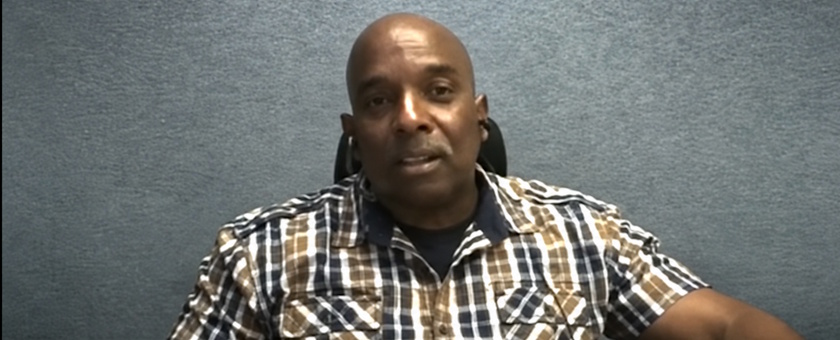
The political assassination shocked the island.
While the Netherlands celebrates freedom on 5 May, that same date took on a painful meaning in Curaçao in 2013. On that day, politician Helmin Wiels was shot dead on the beach at Marie Pampoen.
Wiels was an outspoken politician who challenged corruption and suspected wrongdoing in the gambling industry.
His party, Pueblo Soberano, Spanish for "Sovereign People", was a left-wing populist party that wanted full independence from the Netherlands.
His support grew after the constitutional reforms of 10 October 2010, when the Charter for the Kingdom of the Netherlands was amended and the Netherlands Antilles were dissolved.
In the 2012 elections, his party became the largest.
Shortly before his death, Wiels focused his criticism on Robbie's Lottery, which sold lottery numbers through text messages. He wanted answers about licences, tax payments and where the money went. Two days before his death, he sent dozens of critical questions about these issues to several ministers in the Curaçao government.
The political murder shocked the island. Even though their views were worlds apart, Curaçao got its own Pim Fortuyn: an outspoken politician who was assassinated, leaving a shocked society in his wake. But to understand why Wiels' death continued to raise so many questions, we also need to look at the people and interests that emerged during the investigation.
George Jamaloodin served as finance minister in Gerrit Schotte's government and is the half-brother of Robbie dos Santos, the gambling businessman behind Robbie's Lottery.
Schotte was later convicted in a separate case.
He received a three-year prison sentence for offences that included accepting bribes from another gambling businessman and laundering the money.
That separate corruption case showed that the links between politics and gambling interests in Curaçao were more than just a suspicion.
On appeal, Jamaloodin was sentenced to thirty years in prison for offences that included ordering Wiels' murder.
His half-brother Dos Santos was also suspected of involvement, but prosecutors dropped the case against him in 2021 because there was not enough evidence.
His involvement in the murder has therefore not been proved.
This did not mean that his gambling business escaped investigation. A separate investigation examined the finances of Dos Santos and his companies. In 2016, he was convicted of offences that included money laundering, tax fraud and falsifying documents. The government had lost around fifty million Netherlands Antillean guilders in tax revenue. Dos Santos received a two-year suspended prison sentence, and 72.5 million guilders were confiscated. He therefore did not have to go to prison, but he lost a large amount of money. Serious financial crimes had been established, showing that Wiels' criticism was not without grounds.
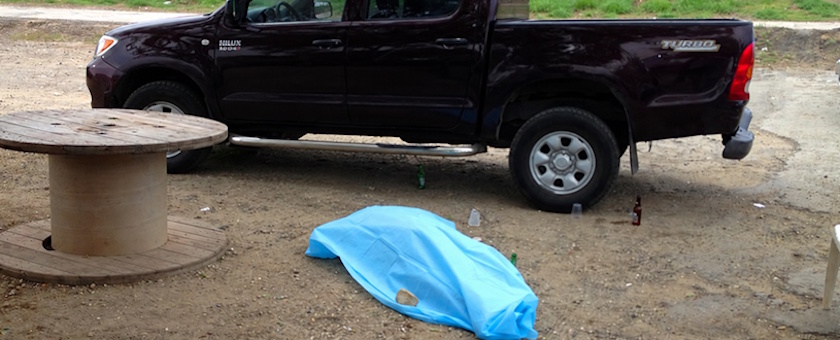
The murder case became more complicated when two important people linked to it died. Raul Martinez, the suspected driver of the getaway car used in the attack on Wiels, was himself murdered a few weeks later. Luigi Florentina, who was suspected of murdering Martinez, was arrested in the Netherlands and transferred to Curaçao. A few months later, he died in a police cell in the village of Barber. An investigation concluded that he had hanged himself. Their deaths meant that neither man could be questioned in court about his role and contacts.
The gunman, one of the middlemen and a man who ordered the murder have been convicted. Yet the convictions have not brought enough closure to the island's residents, as many questions remain unanswered. The exact motive for Wiels' murder remained unclear. Questions also remained about whether everyone involved in ordering it had been identified. This helps explain why the case continues to raise questions for Wiels' family and many people in Curaçao.
Elsewhere in the Kingdom, politicians and their families have also suffered violence. In July 2024, Sint Maarten was shocked by an attack on outspoken politician Olivier Arrindell. His car came under fire. His wife was killed, while Arrindell, his ten-year-old daughter and a fellow party member who were also in the car were injured. Arrindell himself linked the attack to politics and accused political opponents. However, as far as public reporting shows, a political motive has not been officially established. The attack therefore cannot simply be described as an attempted political assassination.
Conspiracy theories also arose around the death of Betico Croes, the driving force behind Aruba's Status Aparte, its status as a separate country within the Kingdom.
On New Year's Eve in 1985, one day before his political goal became reality, he fell into a coma after a car crash in which no other vehicle was involved.
He died almost eleven months later in a nursing home in the Netherlands, without ever regaining consciousness.
The striking timing of the crash led to speculation about sabotage or murder, but those theories have not been proved.
Even in the Netherlands, the political murder of Pim Fortuyn still leaves some people wondering whether there was more to it than the official findings revealed.
It shows how a political murder can not only shock a society, but also leave it facing questions, distrust and conspiracy theories for years to come.
Sources & Reference List