Aruba
One Happy Island

Aruba – From Status Aparte to Adult Autonomy
The first people to live on Aruba were the Arawaks, an Indigenous group who survived by farming, fishing, and hunting. They grew corn, cassava, and beans, and caught fish and shellfish along the coast. The Arawaks made pottery, stone tools, and jewelry from shells and bones. They also left behind red cave drawings that showed scenes from their daily lives. In 1499, Spain discovered and claimed Aruba. The Spaniards mainly used the island as a stopping point for trade and piracy. Many Arawak people were forced out or faced heavy pressure. Although Spanish rule was fairly short, it changed life on the island completely and pushed most of the native population to the side.
When the Dutch took Aruba from Spain in 1636, they did so mostly for money and strategy. The Dutch West India Company was looking for salt in the Caribbean, which they badly needed for the Dutch herring trade.
After the Spaniards kicked the Dutch out of the salt flats near Venezuela, they focused their attention on islands like Curaçao, Bonaire, and Aruba.
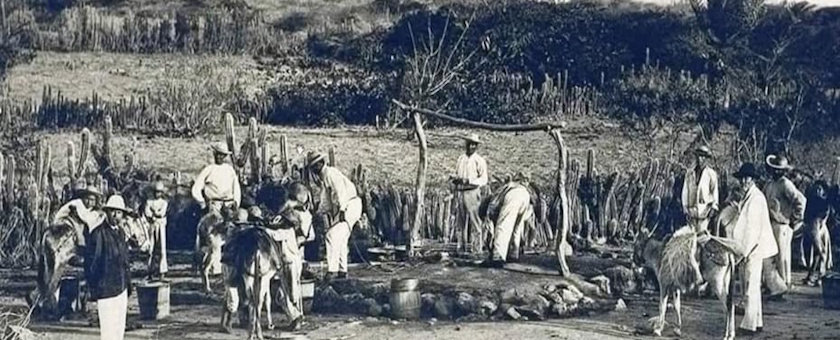
On Aruba, salt was gathered from natural flats, often under brutal conditions.
Indigenous people and later enslaved Africans had to collect this white gold under the burning sun and carry it to the ships. The work was exhausting, and almost all the profits went straight to the Company. In this way, Aruba became a small cog in the Dutch colonial machine.
From Colonial Outpost to Oil Country
Dutch rule brought a huge change to the island. At first, the Dutch West India Company managed Aruba as a strategic stopping point and trading post.
Because of the dry climate, large-scale farming was almost impossible, which kept the island financially dependent on Curaçao.
This only changed in the 1920s. In San Nicolas, the American Standard Oil Company built a large oil refinery. That factory brought jobs, higher pay, and a much better standard of living. Workers came from other Caribbean islands, Venezuela, the United States, and Europe. As a result, the population grew quickly and the society became much more international.
During the Second World War, the refineries on Aruba and Curaçao became important to the whole world. The refinery in San Nicolas and the Shell refinery on Curaçao supplied fuel to the Allied forces. The oil, which came from Venezuela, was processed into gasoline for planes, ships, and tanks. The refinery on Curaçao was especially vital: it was one of the largest in the world and supplied fuel that was essential for the war in Europe and North Africa.
Because of this, both islands became targets. In 1942, a German submarine, the U-156, attacked oil tankers off the coast of Aruba. A few ships were hit, but the refineries were not destroyed. Under the protection of American and Dutch troops, production kept going. The oil from Aruba and Curaçao was later sometimes called "the fuel of freedom," because it literally kept the Allied war effort running.
Status Aparte – Charting Its Own Course
Even so, within the Netherlands Antilles, Aruba remained politically subordinate to Curaçao.
Curaçao was the largest and most influential island, and most decisions about governance, finances, and laws were made there.
Many Arubans felt that Curaçao had too much power and cared too little about their interests. Resistance grew during the 1970s.
Led by Betico Croes and his political party, the Movimiento Electoral di Pueblo (MEP), a broad grassroots movement emerged that fought for self-rule.
The slogan "Status Aparte" became the symbol of that struggle: Aruba did not want to separate from the Netherlands, but it did want to separate from Curaçao and the rest of the Antilles.
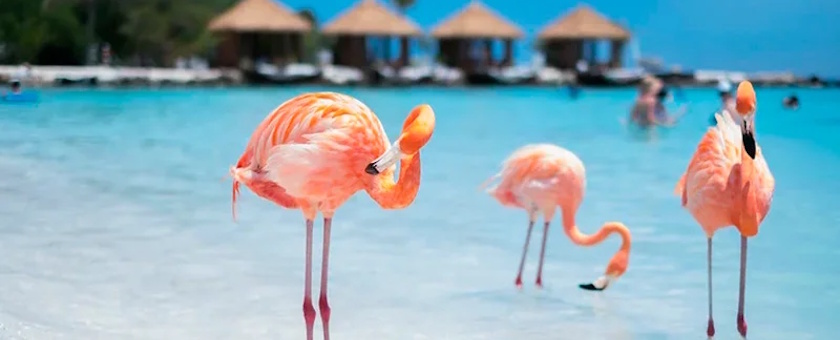
After years of negotiations, Aruba finally gained its autonomous status within the Kingdom of the Netherlands in 1986. It became its own country with its own government and parliament, while remaining part of the Kingdom. The original plan was for Aruba to become fully independent in 1996, but in 1994, the governments of Aruba, the Netherlands, and the Netherlands Antilles decided to put that plan on hold indefinitely. When the oil refinery in San Nicolas closed down later on, the island fell into an economic crisis. Many people lost their jobs, and the government had to search for a new source of income. They found it in tourism. With its white beaches, clear blue sea, and sunny weather, Aruba grew from the 1980s onward into one of the most popular vacation spots in the Caribbean.
During a work visit to the American consulate, I asked the consul at the time why Aruba was so much more popular with Americans than Curaçao.
He looked at me in surprise and said: "Aruba comes first." By that, he was referring to the global hit song "Kokomo" by The Beach Boys, in which Aruba is named first in a list of tropical destinations:
“Aruba, Jamaica, ooh I wanna take you to
Bermuda, Bahama, come on pretty mama
Key Largo, Montego”
I do not know if that story is true. However, it would be remarkable if The Beach Boys accidentally helped contribute to Aruba's success in tourism.
Today, Aruba maintains close ties with the Netherlands within the Kingdom.
The island has its own government and parliament, but relies on the Netherlands for defense, foreign relations, and financial support for major projects.
Still, there is tension at times: many Arubans feel that the Netherlands interferes too much in internal matters, such as budgets or policy supervision.
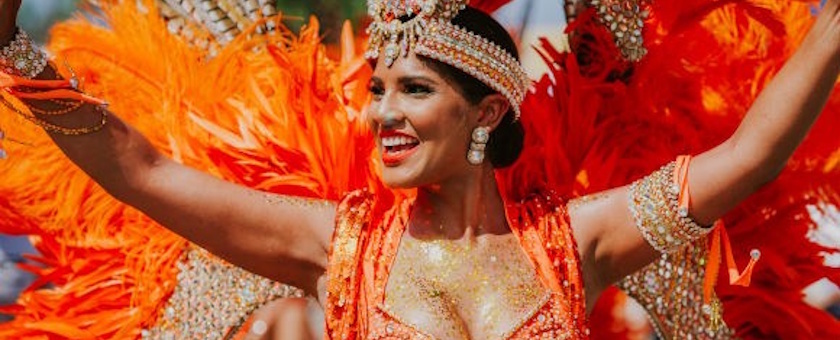
Despite this, Aruba remains proud of its own identity, culture, and language, and successfully presents itself as an independent, modern destination.
Aruba is a small island with a big history, shaped by salt, oil, and sun.