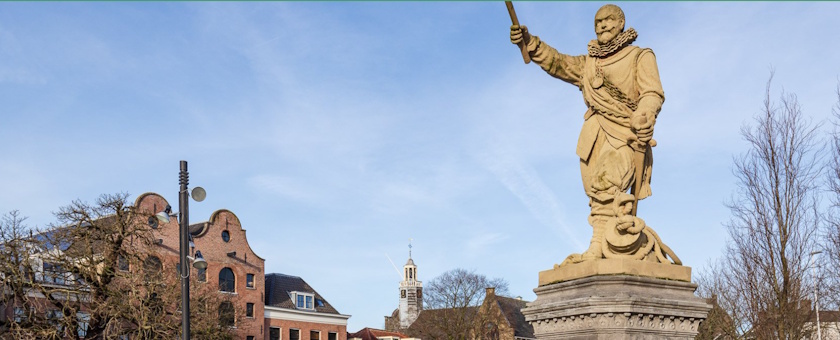
Dutch West India Compagny
the exclusive right to colonization, the trade in humans and goods, and privateering

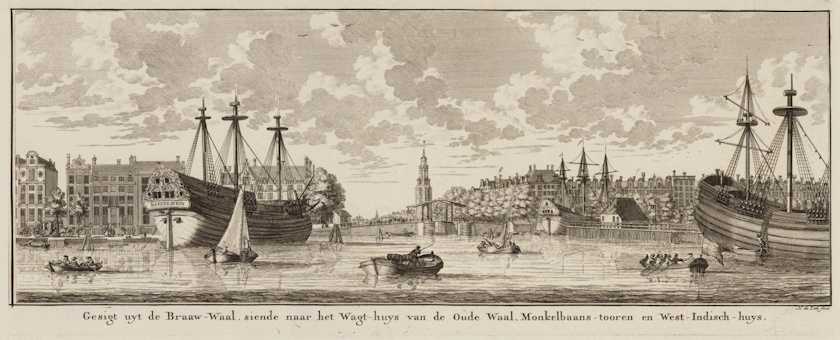
The Dutch West India Company – trade, power and people
AlWhen thinking of the Golden Age, many people immediately think of the VOC (Dutch East India Company).
But the Dutch Republic had another large trading company: the West India Company, or WIC for short.
This organization played an important role in the Atlantic trade, which involved profit, war, colonization, and slavery.
The WIC was founded in 1621. The Netherlands wanted to trade in the Atlantic region and at the same time disrupt its Spanish enemy.
Just like with the VOC, people could buy shares and share in the profits of trade far away.
The capital ledger of the Amsterdam branch shows that both wealthy regents and ordinary merchants invested their money.
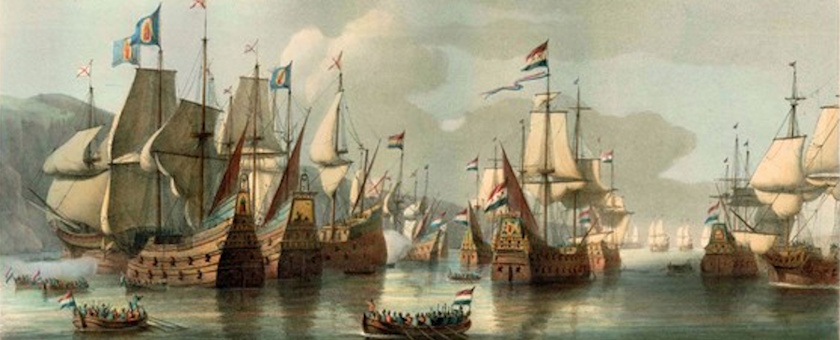
The first major success came in 1628, when Admiral Piet Hein captured the Spanish Treasure Fleet.
That loot of silver yielded enough money to carry out the 'Grand Design', a plan to conquer parts of Africa and South America to dominate trade.
At first, the WIC focused mainly on trade and war. Other European countries, such as Portugal and Spain, had already been active in the transatlantic slave trade since the fifteenth century.
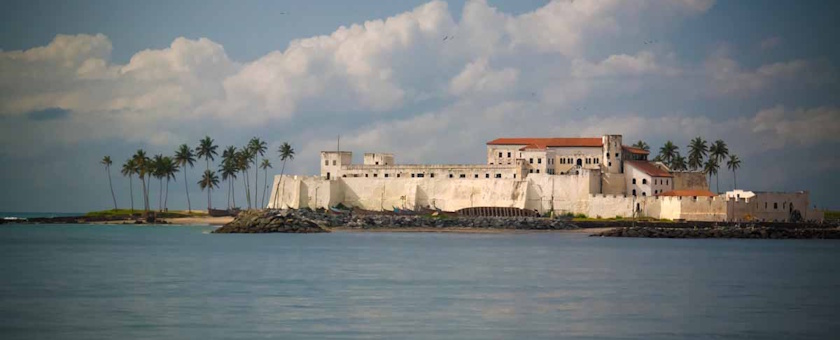
The Netherlands joined this trade when the WIC captured Fort Elmina on the West African coast (present-day Ghana) in 1637.
From that moment on, the WIC bought African men, women, and children from the Ashanti, a powerfully organized kingdom.
The Ashanti controlled much of the gold and ivory trade and supplied slaves to European merchants through forts like Elmina.
The prisoners were often victims of local conflicts or wars within West Africa.
The WIC also conquered Recife and Olinda in Brazil, and it even governed New Amsterdam for a time, which is present-day New York. In North America, they traded in furs, while products like gold, ivory, salt, and sugar came to the Netherlands from the south. Sugar was processed on plantations in Brazil and Suriname, and salt came from the Antilles. African men and women were captured and enslaved for this heavy labor. The journey across the Atlantic Ocean was dangerous, and many people did not survive. This slave trade brought the WIC huge profits, but it also caused great suffering that is still remembered today.
After losing Brazil to the Portuguese, the WIC ran into financial trouble. In 1674, the company went bankrupt, but it was restarted as the Second West India Company. The management became smaller and more efficient, and trade picked up again. Between 1674 and 1730, the WIC even held the Dutch monopoly on the slave trade. In total, the company transported around 300,000 enslaved people, which was more than half of all the slaves the Netherlands ever brought across the ocean.
The WIC worked together with wealthy families, such as the former governor Van Aerssen, Lord of Sommelsdijck, and with the city of Amsterdam. Together, they ruled Suriname. Still, the money problems continued, and the WIC was permanently dissolved in 1792. Traces of the company can still be found in Amsterdam. The directors, known as the Heeren XIX (the Nineteen Gentlemen), first met in the West-Indisch Huis on the Herenmarkt in Amsterdam, then in the West-Indisch Pakhuis near the Prins Hendrikkade, and later in the Voetboogdoelen on the Singel, where the university library of Amsterdam stands today.
The West India Company never achieved the same fame as the VOC. This might be because its successes were smaller, but also because the WIC earned its wealth mainly through slavery. That makes its history complex and, at times, painful.
How people thought about slavery back then
For many Europeans in the seventeenth and eighteenth centuries, slavery was taken for granted.
Slaves were not viewed as human beings, but as property to be traded: men, women, and children who were sold, beaten, and exploited.
Some tried to justify this cruel system using religion, claiming they were introducing enslaved people to Christianity and saving their souls.
It was not until the nineteenth century that people began to realize that slavery was a terrible injustice.
Netherlands finally abolished slavery in 1863.
Timeline of the WIC and Dutch Colonial History
⁕ 1621 - Founding of the WIC; focused on trade and privateering against Spain and Portugal.
⁕ 1624-1664 - Governance of New Amsterdam (present-day New York).
⁕ 1628 - Piet Hein captured the Spanish Treasure Fleet.
⁕ 1630 - Conquest of parts of Brazil; start of Dutch sugar cane plantations.
⁕ 1637 - Capture of Fort Elmina; start of active slave trade by the WIC.
⁕ 1674 - First WIC went bankrupt; founding of the Second WIC with a monopoly on the slave trade.
⁕ 1674-1730 - Peak of exploitation; around 300,000 Africans transported to colonies.
⁕ 1792 - Final dissolution of the WIC.
⁕ 1814 - The Netherlands officially banned the slave trade.
⁕ 1815 - Establishment of the Kingdom of the Netherlands; William I became king.
⁕ 1863 - Abolition of slavery in the Kingdom of the Netherlands.
Why this is important to know
The history of the WIC shows how trade, power, and exploitation were connected in the seventeenth century.
By knowing this past, we better understand how the Dutch colonial empire came to be.
The 'VOC mentality'
Centuries later, in 2006, Dutch Prime Minister Jan Peter Balkenende spoke in the House of Representatives about the "VOC mentality", referring to the courage, entrepreneurship, and trading spirit of the seventeenth-century Dutch Republic.
His remark was meant positively, but it also sparked criticism. Alongside courage and innovation, there was also harsh exploitation, especially by the WIC, which traded in human suffering.
It shows that our colonial past is not only a source of pride, but also a source of uncomfortable questions.