The Dutch slavery past
A dark chapter in our shared history.

How the Dutch Became Involved in the Slave Trade
In the early 17th century, Dutch sailors traveled around the world to find new trade routes.
They wanted to buy and sell valuable goods like spices, gold, silver, sugar, and coffee.
Trading people from Africa was not their main focus at the time.
Long before Europeans arrived, a trade in enslaved people already existed in Africa.
People were captured during wars between tribes, or as a punishment for crimes or debts.
They were then sold to other regions in Africa or to Arab countries like Egypt, Saudi Arabia, and Oman, where they worked as laborers, soldiers, or goods.
When Dutch traders reached the west coast of Africa, they joined these existing trade networks. For the enslaved people, this meant capture, loss of family, and a forced, dangerous journey across the ocean. People were kept in crowded ships with very little food and water, almost no room to move, and frequent abuse. Many enslaved people did not survive the voyage. The entire system was focused on profit, so the suffering of the enslaved people was ignored, making the journey extremely painful and harsh.
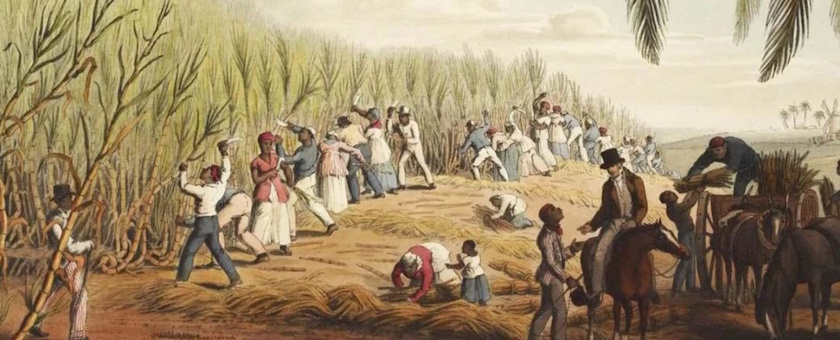
When the Dutch started running their colonies in the Caribbean and the Americas, including Curaçao, Suriname, and the Dutch Antilles, they realized they needed many workers for the plantations. The local population was too small or weakened by diseases, and European workers were either too expensive or unwilling to work on the plantations. Only then did the Dutch decide to use enslaved people from Africa as laborers. African traders had already captured people and were willing to trade them for weapons, textiles, alcohol, or other European products. In this way, the trade in human beings grew into a profitable, yet cruel and brutal business.
Cities like Amsterdam, Middelburg, and Rotterdam supported this trade as logistical and financial hubs. Ships were built and supplied in these cities, money was invested, and trips were planned to keep the trade running smoothly (Middelburg served as the WIC headquarters in Zeeland). Through this involvement and the organization of the Dutch West India Company (WIC), the Netherlands became a major and highly efficient player in the Transatlantic slave trade. Dutch ships carried thousands of enslaved people to the Caribbean, Suriname, and the Americas, where they were forced to do hard labor on plantations.
The Scale and Impact of Dutch Slavery
Compared to other European countries, Portugal and Spain started earlier and transported large numbers of enslaved people. France and England later grew into larger players than the Netherlands in total numbers. Still, despite its relatively small size, the Netherlands was one of the most organized and efficient traders, which made the system even more cruel.
After the Transatlantic slave trade was officially banned in 1814, slavery itself continued in the Dutch colonies. Plantation owners still needed workers for their fields and developed strategies to grow the enslaved population internally. Women who could have children were systematically used to produce offspring, who were automatically born into slavery. This practice ensured that new generations would replace those who had died or been sold.
When slavery was abolished in 1863, former enslaved people were forced to continue working for their former masters for ten more years. During this transition period, they received a low wage, often in small amounts of money, food, or shelter. This was far from enough to live on independently.
In short, the Dutch started by trading goods, but turned to slavery as soon as the colonial economy needed cheap labor. For the enslaved people, this meant the total loss of freedom, family, and life under a system built purely on profit. By working with existing African traders and using their trade routes, the Netherlands became a major, efficient, and highly exploitative link in the Transatlantic slave trade.

The historic slave huts on Bonaire, where enslaved people stayed during their work at the salt pans.
Bibliography