Papiamento
The rich linguistic history of the Caribbean part of the Kingdom

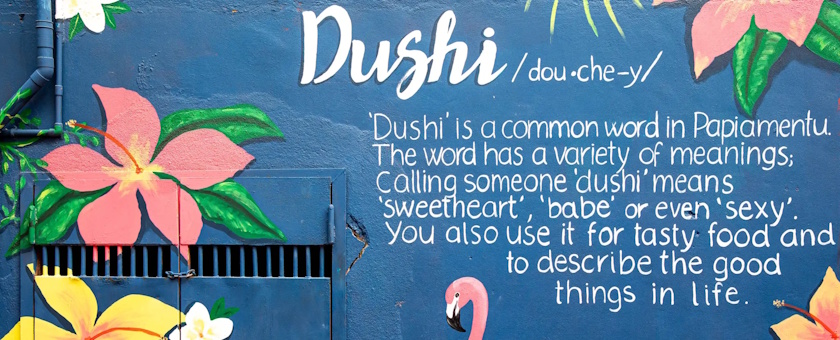
Language is one of the primary ways people communicate with each other. At the same time, language illustrates how diverse people and cultures can be.
Words and sounds change from country to country, region to region, and even from town to town.
While this can sometimes present communication challenges, above all, it demonstrates the rich diversity of language.
The story of the Tower of Babel is a well-known example of this phenomenon.
This linguistic variety is also clearly visible within the Kingdom of the Netherlands. Alongside Dutch and Frisian in the European part of the Netherlands, other languages hold official or recognized status within the Kingdom.
For instance, English is the primary language on the islands of Saba and Sint Eustatius. People there mostly speak English in daily life and in education, while Dutch is typically taught as a foreign language. On Sint Maarten, an autonomous country within the Kingdom, both English and Dutch are official languages, though English is the dominant language in everyday life.
On the islands of Aruba, Curaçao, and Bonaire, Papiamento plays an essential role.
On Aruba and Curaçao, it is officially recognized as an administrative language.
On Aruba, the language is called Papiamento, whereas on Curaçao, it is called Papiamentu.
On Bonaire, Papiamentu holds recognized regional language status and is widely used in daily life and education.
Although it is essentially the same language, variations exist between the islands. Curaçao and Bonaire use a phonetic spelling system, meaning words are written as they sound.
Aruba employs an etymological spelling system that reflects the historical origins of the words.
For example, consider the word for "to eat":
On Bonaire and Curaçao, it is written as "kome" with a "k".
On Aruba, it is written as "come" with a "c" because the word derives from the Spanish "comer", although the pronunciation remains identical.
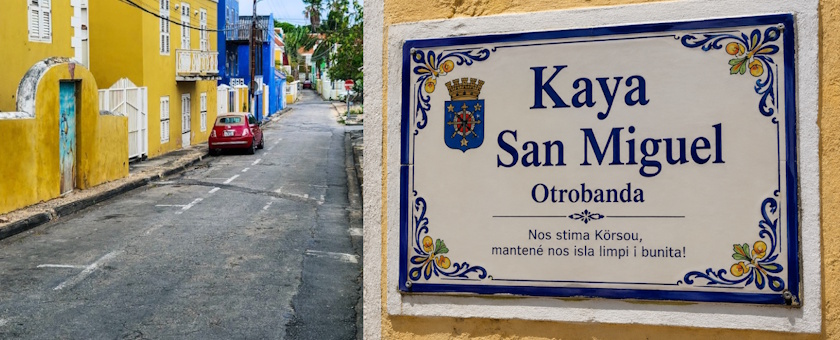
Papiamento is a creole language that originated in the seventeenth century, closely linked to the period of the slavery past when diverse groups of people and cultures converged on the islands.
A key group in this development was the Sephardic Jews.
After fleeing persecution in Spain and Portugal, they settled on Curaçao via routes through places like Amsterdam and Brazil.
They brought a Portuguese dialect that had already incorporated elements from years of contact with other languages and cultures.
Used extensively in commerce and daily interaction, this dialect gave Papiamento strong Portuguese and Spanish roots.
Over time, influences from Dutch, English, and various African languages were integrated. The indigenous inhabitants of the islands, the Arawaks, also left a lasting mark on the language.
Even the name Papiamento reflects these origins.
The term stems from the Portuguese word "papia", which means to talk or converse.
In this way, Papiamento demonstrates how a rich, vibrant language can emerge from the meeting of different cultures. The entire history of the islands is woven into this single language, serving as a meeting ground for diverse peoples, tongues, and traditions.
However, the status of Papiamento is not uniformly secure. On Bonaire, a special municipality of the Netherlands, there is ongoing debate regarding the role of the language in education.
Although Papiamentu is the mother tongue of most residents, it often receives limited classroom time. Dutch remains the primary medium of instruction, even though many children speak little to no Dutch at home. This dynamic presents significant challenges for students.
Young people relocating to the European Netherlands for higher education sometimes find their Dutch proficiency falls short of expectations. Critics argue that this stems from the underutilization of their native language in early schooling.
Although Papiamentu was officially recognized in 2024 under the European Charter for Regional or Minority Languages, the full impact of this status is still developing in daily life.
Local island authorities and the Dutch government in The Hague continue to negotiate the most effective educational approach.
Ultimately, the language debate on Bonaire encompasses more than education alone; it touches on the broader question of language equality within the Kingdom and whether that equality is meaningfully realized in the classroom.
Viewed in this light, the blend of languages across the islands is not a barrier like the Tower of Babel, but rather a rich, living heritage that continues to evolve today.

Papiamento Vocabulary Overview
| English | Papiamentu Curaçao & Bonaire | Papiamento Aruba |
|---|---|---|
| Good morning | Bon dia | Bon dia |
| Good afternoon | Bon tardi | Bon tardi |
| Good evening | Bon nochi | Bon nochi |
| Have a nice week | Bon siman | Bon siman |
| Welcome | Bon bini | Bon bini |
| How are you? | Kon ta bai? | Con ta bai? |
| Thank you | Danki | Danki |
| Yes | Si | Si |
| No | No | No |
| Eat | Kome | Come |
| Drink | Bebe | Bebe |
| White | Blanku | Blanco |
| Black | Pretu | Prieto |
| Meat | Karni | Carni |
| Fish | Piska | Pesca |
Bibliography
- en.wikipedia.org
- dushipapiamentu.nl
- palabricks.nl
- taalcentrum-vu.nl
- henkyspapiamento.com
- literatuurgeschiedenis.org
- taalunie.org
- caribischnetwerk.ntr.nl
- bonairegov.com
- dossierkoninkrijksrelaties.nl
What are Sephardic Jews?
Sephardic Jews originate from the Iberian Peninsula (Spain and Portugal). Their name derives from Sefarad, the Hebrew word for Spain.
Ashkenazi Jews originate from Central and Eastern Europe, primarily from areas including present-day Germany, Poland, and Russia. Today, they represent the largest Jewish community worldwide. Ashkenaz is the Hebrew term for Germany and the broader German-speaking region.
Karaite Judaism represents a distinct movement within the faith. Karaites adhere strictly to the written text of the Tanakh and do not accept the Oral Torah or Rabbinic traditions such as the Talmud. Karaites reside primarily in Israel, Ukraine, Egypt, and other regions.